In the quiet unfolding of community work, where change is seemingly slow and trust is earned one conversation at a time, Mariefe Del Mundo‑Quitoriano, better known as “Mhaf”, has built her leadership and work ethic on a foundation more enduring than any policy or strategy—the belief that the best outcomes grow from meaningful engagement. As the Community Stakeholder Engagement and Operations Manager of Ramon Aboitiz Foundation, Inc.’s (RAFI) One to Tree program, she understands that effective reforestation succeeds not simply because seedlings are planted, but because communities choose to nurture them as they grow into trees.
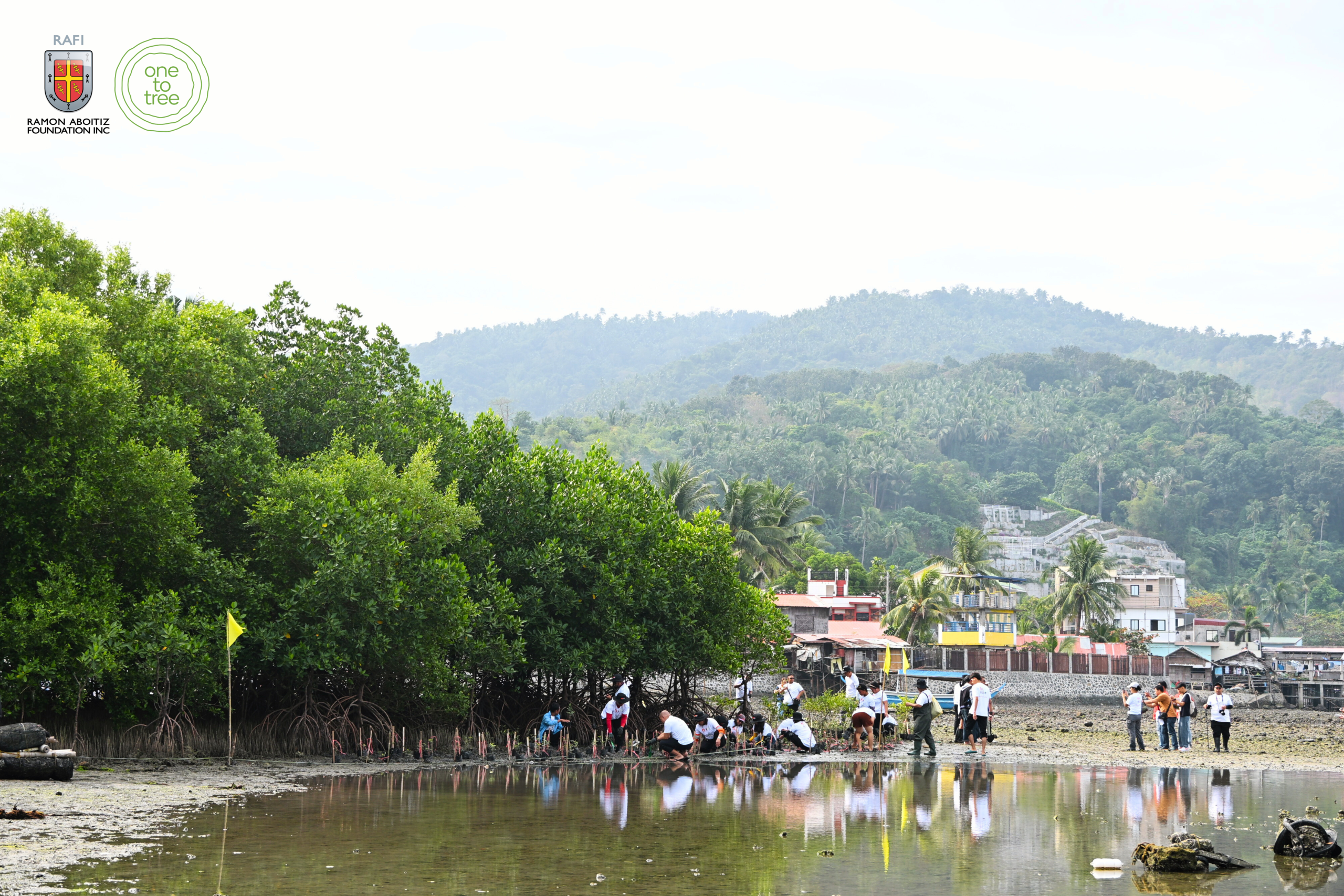
One to Tree (OTT) is the tree‑growing program of RAFI, aimed at increasing forest cover and mitigating the effects of climate change. Now present not just in Cebu, but also in Batangas (Luzon), and Davao (Mindanao), the program engages local communities in biodiversity conservation while fostering environmental stewardship among residents. By emphasizing the ecological value of growing terrestrial and mangrove trees and supporting farmers and fisherfolk with an additional source of income, the initiative helps families become guardians of their own natural heritage. Through partnerships with government agencies and the private sector, RAFI One to Tree empowers farmers, fisherfolk, and people’s organizations to cultivate trees and contribute to a more resilient environment.

Mhaf’s journey into RAFI One to Tree began long before her first day on the job. After almost fifteen years of community development, she had learned through experience, failure, and patience, that programs tend to create strategic impact when there is alignment between people and processes. When she learned that RAFI One to Tree deeply values community participation in reforestation work, she immediately recognized the bottom‑up community‑driven approach she had always believed in—one shaped by real conversations and real needs.
“We don’t just plant trees,” she says. “We consult with communities about what they want for their land. We listen to what kind of species they prefer and provide technical assistance to help protect the trees and strengthen their livelihoods. We don’t come with a template. Every community is different and every engagement is unique.”
Mhaf knew she had found the kind of work she wanted to continue, where stakeholder engagement wasn’t treated as a formality but is embraced as the heart of reforestation. For her, real progress begins with people, their voices, and their lived experiences.
When Mhaf talks about her role, she never begins with what she teaches communities; she begins with what she learns from them. “To engage stakeholders well, you have to listen—not to respond, but to understand,” she explains. “People trust you when they feel that what you say matters, and that what you say is translated into action.”
This principle shaped her approach when RAFI One to Tree expanded to Batangas in 2022, a province still quite unfamiliar with the organization’s work. There were no shortcuts. Engagement had to be earned through transparency, patience, and a genuine willingness to understand local contexts before introducing solutions.
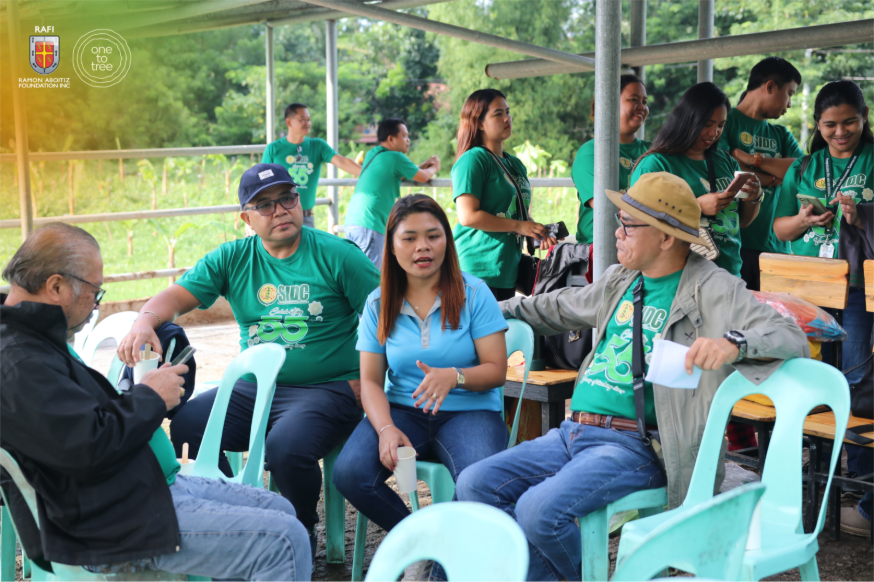
“It wasn’t easy at the beginning,” she recalls. “We had to show them that our program is not just technical—it’s transformational. We are here not only for tree-planting, but for tree‑growing, which means long-term partnership and presence.”
Different stakeholders required different forms of engagement, and Mhaf knew there was no one-size-fits-all approach. LGUs and other government agencies needed open communication and consistent updates; people’s organizations (POs) required regular visits and shared decision‑making; and individual farmers and fisherfolk needed reassurance that the commitment was mutual. Building that trust took time. Mhaf invested herself in every visit, every conversation, every shared decision. “You don’t build relationships in just one or two visits,” she says. “Stakeholder engagement is a two-way relationship. Collaboration happens because trust is there.”
Among her many memories in the field, one moment stood out when a farmer approached her during a visit and said, “Thank you. You didn’t abandon us. Others came, gave something, and never returned. But you stayed. You were true to your mission.”
That moment reminded her that engagement is not a formality, but rather a relationship. That “thank you” came not from compliance or project completion, but from trust earned over time. It validated the hours under the sun, the coordination with LGUs and other local stakeholders, and the countless adjustments to ensure community agreement.
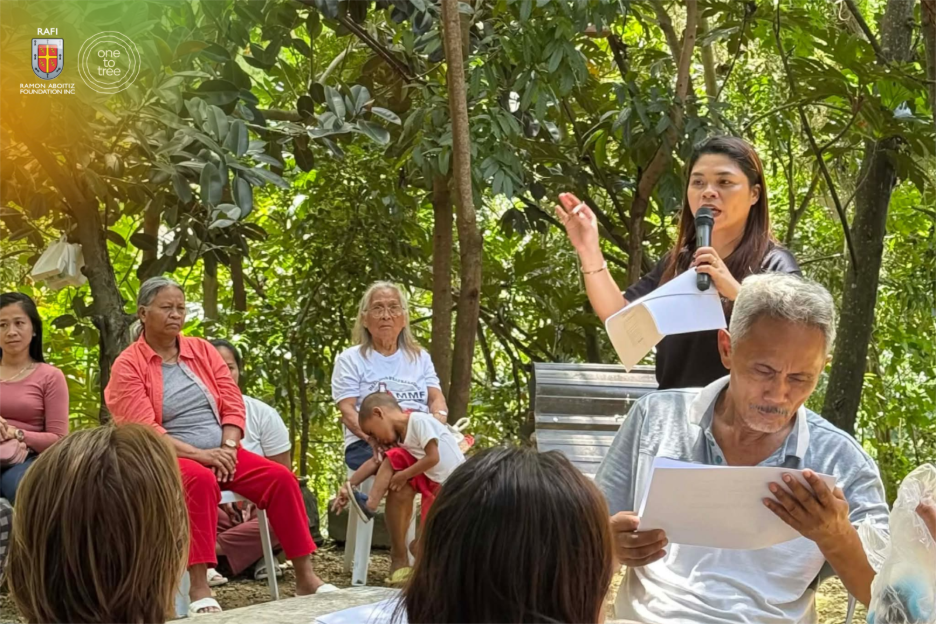
As she has seen, relationships can transform landscapes. When partner farmers proudly send her photos of once-barren lands now thriving with fruit-bearing trees, or when LGUs—like those in Lian, Batangas—begin advocating not just planting trees, but also nurturing them as they grow and encouraging others to do the same, it becomes clear that sincere stakeholder engagement ripples outward.
These moments resonate with her deeply—not only as a development worker, but as the daughter of farmers. Coming from a family whose parents worked on the land, she admits she was not always closely involved in farm life growing up. But witnessing how farmers care for each seedling and celebrate every tree’s growth has made her appreciate her parents’ labor in a more profound way. “Hindi pala madali at never pala syang naging madali,” she reflects. “You will be attached to every seedling/tree you’ve planted/grown.” It is this personal connection, woven into the work, that makes every success in the field even more meaningful to her.
“When you hear your advocacy being echoed by your partners,” she says, “you know you’re influencing them to carry the same mission, and that’s one thing that moves me.”


As these relationships strengthen and advocacy spreads, Mhaf finds that women often stand at the center of this movement. Many of RAFI One to Trees’ partner POs are led or mobilized by women who have emerged as organizers, key officers, communicators, and advocates for tree-growing.
“It’s inspiring to see women take active roles in seedling production, planting, and maintenance; and strengthening their respective organizations,” she says. “They show that they are not just participating—they are shaping the work. Their voices matter in decision-making, and they know it.”
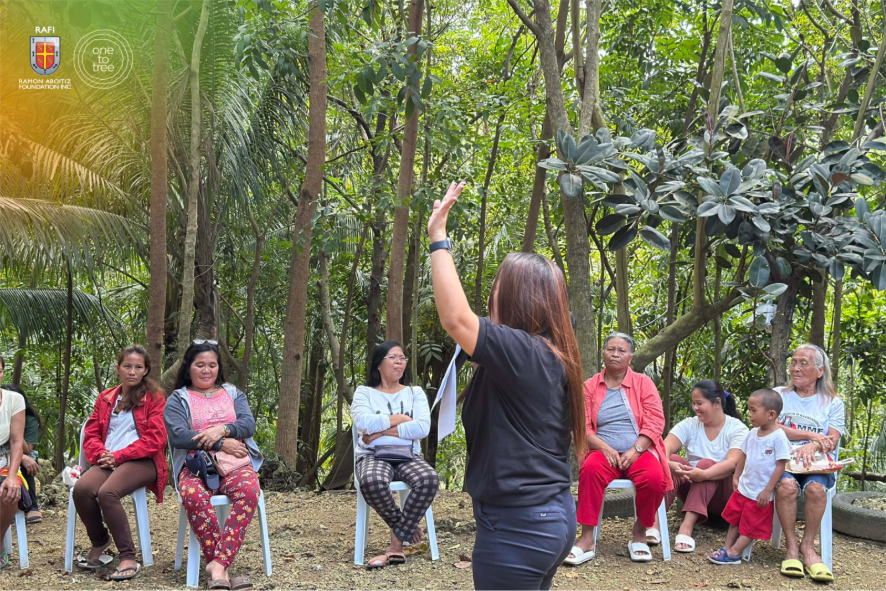
She sees that women, at least among the stakeholders of RAFI One to tree, bring perspective, leadership, and emotional intelligence that strengthen relationships between RAFI and communities. In a field where engagement can determine success or failure, women have become essential anchors.
She considers herself fortunate to work in a sector that increasingly believes in gender equality, though she still notices everyday biases in society, like offhand comments about women drivers. These moments remind her of the importance of self‑trust. “Kung gusto mong paniwalaan ka ng tao, you have to trust yourself first,” she says. “If you want people to believe in your advocacy, you have to walk the talk and practice what you say.”

Mhaf’s hope for RAFI One to Tree and its communities is grounded in one word: ownership. She dreams of communities who see the trees not as project outputs, but as part of their future—assets that will benefit their children and grandchildren.
Older farmers, who make up most of RAFI One to tree’s partner-farmers, often ask her, “Maabutan pa kaya namin lumaki o bumunga ito, ma’am?” She always reminds them to look beyond the present and toward the legacy they are creating. When communities take ownership, they become stewards of both the forests and their own futures.
“I hope that despite climate challenges, frustrations, and setbacks, communities will not lose hope,” she says. “I hope their pain turns into a purpose. That challenges become opportunities.”
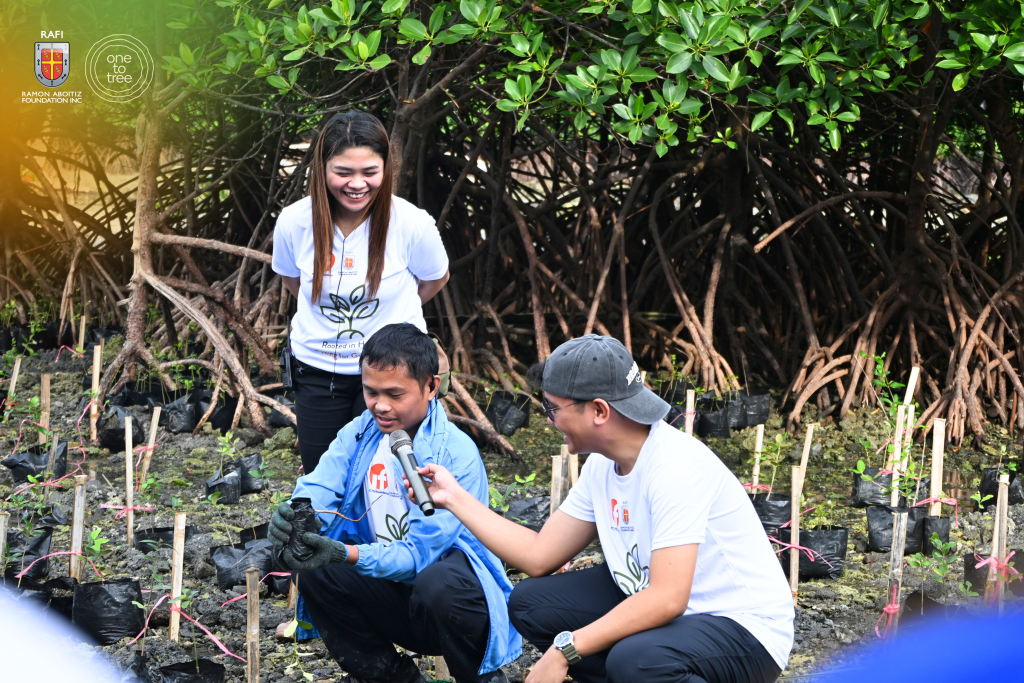
This commitment to nurturing community ownership is deeply tied to Mhaf’s own quiet brand of leadership.
“I want to work silently,” she says. “I want the team to be at the front; they deserve the recognition.” It reflects her belief that transformative work in communities is never the result of one person alone but of unity and shared effort. And perhaps that is why communities trust her—because her leadership is not measured by visibility but by the relationships she builds, the voices she amplifies, and the futures she helps communities grow together.
As she continues her work in community engagement in the environmental sphere, she leaves this message to the women working—or hoping to work—in environmental and community spaces:
“Don’t hesitate to express yourself as a woman. Use the space you’re given to make an impact. Inspire, not to impress, but to influence. We have an important role in ensuring a greener future—not only for our families, but for the generations who will come after us.”
As communities and women leaders like Mhaf continue nurturing the forests of tomorrow, you can help this mission grow even further. By getting involved, you become part of the movement to build greener, more resilient communities—one tree at a time.